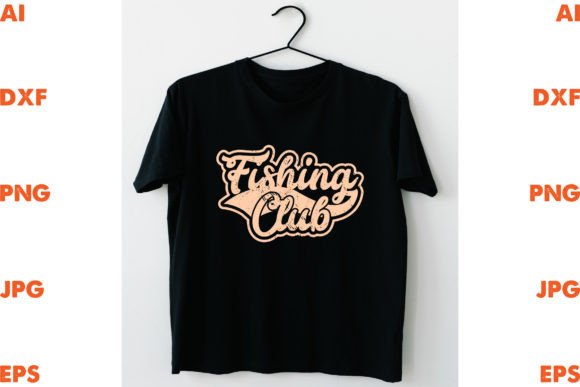
Fishing Club: A Designer's Take on This Bold Embroidery Asset
When I first pulled up the Fishing Club design file on my screen, my immediate reaction wasn't just about the theme; it was about the potential application in a real-world shop environment. As someone who spends hours digitizing, stitching, and troubleshooting for clients, I look at every new machine embroidery design with a critical eye. Does this work on a cap? Will it puckers on a thin tee? Is the layout versatile enough for a boutique brand? The Fishing Club graphic presents an interesting case study for apparel decorators and Etsy sellers looking to expand their catalog beyond generic text-based logos.
The visual personality of this piece leans heavily into community and leisure. It evokes a sense of camaraderie, perfect for local angling groups, family reunions, or even a quirky "dad joke" gift line. The composition suggests a balance between illustrative elements and bold typography, which is crucial when translating a digital image into thread. In the world of T-Shirt Designs, clarity is king. If the details get lost in the stitch count, the design fails. My initial assessment is that Fishing Club has the structural integrity to hold up well, provided the operator pays attention to fabric selection and stabilization.
Putting the Design to the Test: A Real-World Scenario
To truly evaluate an embroidery file, you have to imagine it leaving the safety of your computer monitor and hitting actual fabric. Let's say I have a client running a small coastal bait shop who needs merchandise for the upcoming summer season. They want something that feels established but fun. Fishing Club fits this brief perfectly. I can visualize this stitched onto a heavy-weight cotton tote bag, serving as a durable carry-all for gear. The broad strokes of the design would contrast beautifully against canvas, creating a high-end handmade product feel rather than a cheap promotional item.
Alternatively, consider the sweatshirt embroidery market. A fleece hoodie with this design centered on the chest creates an instant uniform for a fishing trip or a casual weekend look. Because the design allows for editing all elements easily, I could customize the text to include a specific year or location, turning a standard graphic into a highly desirable personalized gift. This adaptability is what separates a good asset from a great one. For craft business owners, the ability to tweak the design means you aren't selling the exact same thing as everyone else, which is vital for brand consistency and customer trust.
However, we must address the specifications provided. The description notes a size of 18 feet by 15 feet. In the context of digital Graphics and vector-based assets intended for scaling, this likely refers to the maximum printable or editable dimensions in a design software environment, rather than a literal embroidery hoop size. No standard home or commercial embroidery machine hoops anywhere near that size. This distinction is critical. Before stitching, you must scale this down to fit your specific hoop size, whether that is a 4x4 inch hoop for a pocket logo or a 5x7 inch hoop for a full back design. Always check your software to ensure the aspect ratio remains correct during resizing.
Navigating Fabric Challenges and Stitch Density
One of the most common pitfalls in using pre-made designs is ignoring the relationship between the artwork and the fabric texture. Fishing Club appears to have areas that would benefit from a fill stitch to create solid blocks of color, alongside potential outlines that might use a satin stitch or running stitch. When working with stretchy fabrics like jersey knits for t-shirts, high stitch density can cause the garment to pucker or warp. If you plan to use this for custom apparel, I strongly advise using a cut-away stabilizer rather than tear-away. This provides permanent support and prevents the design from distorting after multiple washes.
Textured fabrics present another challenge. If you are stitching this onto a waffle-knit thermal or a rough linen apron, the needle may struggle to penetrate evenly, leading to gaps in the coverage. In these cases, testing on scrap fabric is non-negotiable. You need to see how the thread colors interact with the base material. A dark navy thread might disappear on a black sweatshirt, ruining the definition of the design. Conversely, light threads on dark fabrics require careful underlay management to prevent the background from showing through. Since the file allows for easy editing, take the time to adjust the color palette to maximize contrast before you ever load the bobbin.
Curved surfaces, such as baseball caps, require extra caution. The center of the cap is unforgiving. If Fishing Club has wide horizontal elements, they might not lay flat on the curved visor area without significant distortion. For hats, it is often better to isolate the central icon of the design and omit wider text elements unless you have experience with complex framing techniques. An embroidered patch might be a smarter route here; stitch the design onto twill, cut it out, and then applique it onto the hat. This method bypasses many of the tension issues associated with direct-to-garment embroidery on structured items.
Commercial Viability and Brand Perception
For small shop product lines, the perceived value of the finished item is everything. A sloppy stitch job can ruin a brand's reputation overnight. Fishing Club offers a professional aesthetic that, when executed correctly, elevates the finished product. It signals to the buyer that thought went into the creation. Whether you are creating holiday embroidery gifts for family or building a line of commercial embroidery goods for a local club, the clarity of the design impacts buyer engagement. Customers are drawn to clean lines and legible text. If the tiny details in the design blur together due to poor thread choice or low resolution, the item looks amateurish.
It is also worth considering how this design translates to digital marketing. In the age of online sales, your printable mockup quality matters. Because this is a scalable graphic, you can generate high-resolution previews for your Etsy listings or website without needing to stitch a sample first. This saves time and resources when launching new design assets. However, remember that what looks good on a screen doesn't always translate to thread. Always verify the physical output. Check the small corners and tight curves. If there are areas where the stitches crowd too closely, you may need to manually edit the file to reduce density or increase pull compensation.
Final Thoughts for the Practical Creator
In conclusion, Fishing Club is a versatile asset for those willing to put in the preparatory work. It shines brightest on stable, medium-weight fabrics where its details can breathe. It is an excellent candidate for tote bag design, baby embroidery (when scaled appropriately and softened with the right backing), and team uniforms. The ability to edit elements gives you the creative freedom to make it your own, which is essential for standing out in a crowded marketplace.
Before committing to a production run, remember the golden rules: test on scraps, verify your licensing terms for commercial use since the provided text mentions a ZIP folder but lacks specific legal details, and respect the limitations of your machine's hoop size. Treat this design not just as a picture, but as a blueprint for a tangible object. With the right stabilizer, thread, and fabric pairing, Fishing Club can become a staple in your portfolio, delivering both aesthetic appeal and durability for your customers.