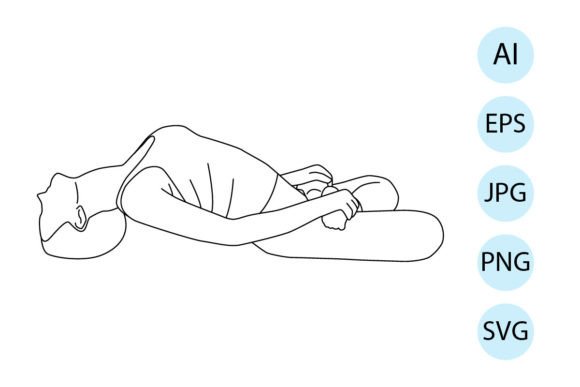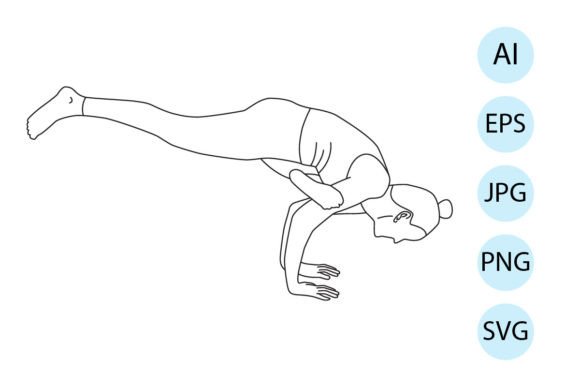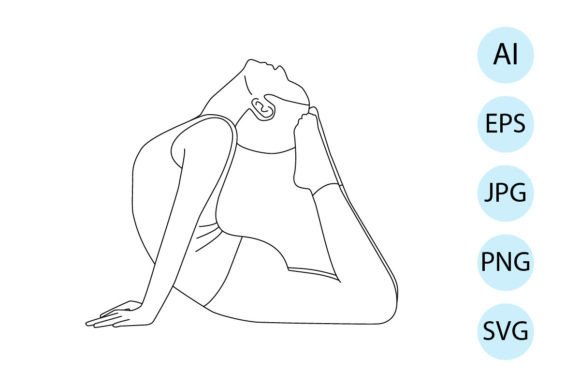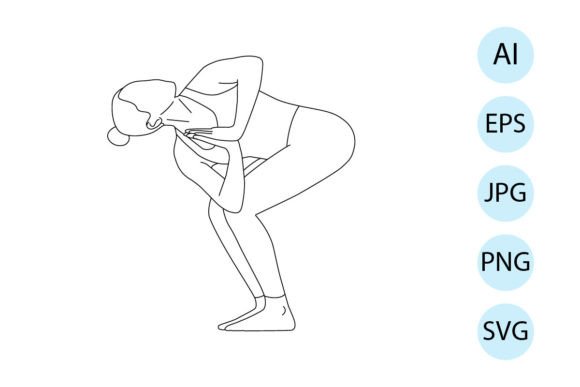
Review: Line Art Yoga in Revolved Heron Pose
As a designer who spends more time staring at stitch simulations than I do sleeping, I approach every new machine embroidery design with a healthy dose of skepticism. We have all been there: you download a beautiful graphic, load it into your software, and realize too late that the lines are too close together or the details will vanish into a puckered mess on a cotton tote. That is why I took a hard look at the Line Art of Yoga in Revolved Heron Pose before committing it to any client project. This isn't just a pretty picture; it is a potential asset for your craft business, but only if you understand how it translates from screen to thread.
The Aesthetic: Minimalism Meets Movement
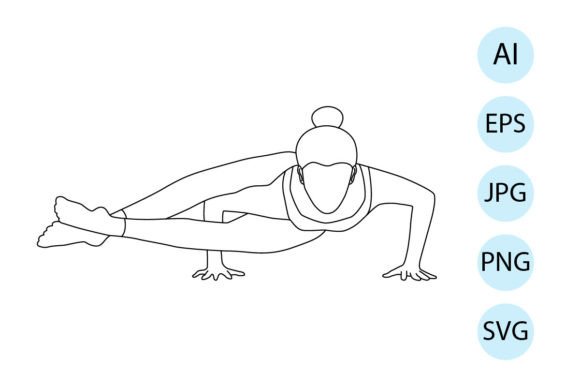
My first impression of this Illustrations piece was its striking simplicity. The Revolved Heron Pose (Parivrtta Bakasana) is an advanced arm balance that requires immense core strength and focus. Capturing that tension and grace in a single continuous line is no small feat. The design exudes a calm, meditative mood, making it perfect for the current trend of mindful living apparel. Unlike dense, heavy logos that can stiffen a garment, this line art feels airy and modern.
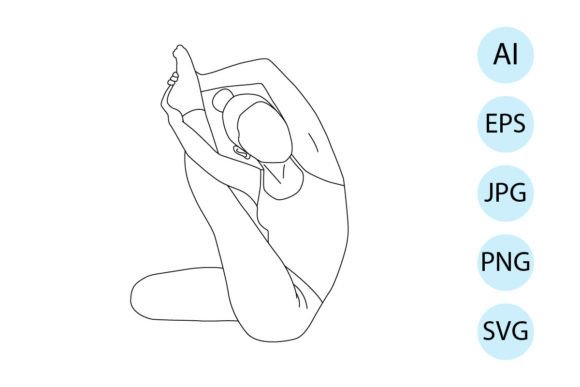
Visually, the layout is vertical and elongated, which immediately tells me where it belongs. It screams "center chest" on a oversized sweatshirt or "full back" on a yoga tank. The lack of internal shading means we aren't fighting with complex fill stitch directions or worrying about thread breaks in tiny corners. However, "simple" does not always mean "easy to stitch." In line art, every micron counts because there is nowhere to hide a wobble or a misalignment.
Real-World Application: The Boutique Sweatshirt Test
To truly evaluate this Graphics file, I imagined a specific scenario: a local yoga studio owner wants a run of custom hoodies for their instructor team. They want something understated but recognizable. This is where the Line Art of Yoga in Revolved Heron Pose shines. If I were digitizing this myself or using a pre-made embroidery file, my goal would be to maintain that fluid, hand-drawn feel.
For a sweatshirt embroidery project, the weight of the fabric works in our favor. French terry or heavy cotton blend provides enough stability to support the lines without excessive gaping. I would likely choose a matte polyester thread in a charcoal or deep sage green to keep with the earthy yoga vibe. The result would be a handmade product that feels premium rather than promotional. Customers are increasingly wary of cheap, plastic-looking prints; a stitched line art design signals quality and permanence, increasing the perceived value of the finished product.
Beyond apparel, this design is a strong contender for home goods. Imagine this stitched onto a linen tote bag design for carrying yoga mats, or perhaps a decorative pillow cover for a meditation corner. The linear nature of the art complements the weave of natural fabrics beautifully. It also works well as an embroidered patch that can be ironed onto denim jackets or canvas bags, offering versatility for Etsy seller inventories who need to maximize a single design across multiple product types.
Technical Considerations and Fabric Challenges
While the design is versatile, it is not universal. There are specific scenarios where you need to proceed with caution. Because this is line art, it relies heavily on the contrast between the thread and the background. On dark fabrics, you must ensure the thread colors are vibrant enough to pop, or the subtle curves of the pose will get lost. Conversely, stitching white thread on white fabric might look chic in a vector preview, but in reality, it often disappears unless the lighting is perfect.
Texture is another critical factor. If you attempt this on a highly textured towel or a looped knit, the running stitch or thin satin columns might sink into the pile, breaking the visual continuity of the figure. For these materials, a heavier underlay or a slight increase in stitch width might be necessary, though that risks losing the delicate "line" aesthetic. Similarly, stretchy fabrics like spandex blends used in active wear require a robust stabilizer strategy. Without proper hooping and backing, the movement of the fabric during wear could distort the long vertical lines of the heron pose, making the yogi look like they are melting.
Curved surfaces present another hurdle. Placing this on a structured cap is possible, but the vertical orientation of the pose conflicts with the curve of the crown. You would need to carefully map the stitch path to prevent the design from warping over the front panel. For small hoop sizes, you may find that the extremities of the pose—the hands gripping the feet or the extended leg—get cut off. Always check the dimensions of the hoop size against the design bounds before promising a client a specific placement.
Density and Detail Management
One of the biggest advantages of this design is its likely low stitch density. High-density designs can turn a soft t-shirt into a cardboard shield, but line art usually breathes. This makes it ideal for baby embroidery where skin sensitivity is a concern, or for large back pieces on jackets where weight matters. However, low density means less margin for error. If the digitizer has not optimized the tie-ins and tie-offs, you might see loose jumps or messy backs. Always inspect the stitch sequence in your software before loading it onto the machine.
Maximizing Commercial Value
For those running a small shop product line, consistency is key. This design offers a clean look that scales well from a small logo on a pocket to a large statement piece. It enhances brand consistency because it is distinct without being noisy. When customers see this level of detail in a personalized gift or custom apparel, it builds trust. They recognize that effort went into the creation, distinguishing your brand from mass-produced screen prints.
If you are creating printable mockup files for digital sales or listing previews, this vector-based origin allows for crisp scaling. However, remember that what looks good on a screen doesn't always translate to thread. Before listing this as a commercial embroidery option, test it on the actual garments you intend to sell. Take photos in natural light to show the true texture of the stitches. This transparency boosts buyer engagement and reduces return rates.
Final Verdict and Designer Notes
The Line Art of Yoga in Revolved Heron Pose is a sophisticated choice for modern embroidery projects. It fits seamlessly into the wellness market, appealing to yogis, mindfulness coaches, and anyone who appreciates minimalism. However, its success depends entirely on execution.
Before you start stitching, here are my practical recommendations:
- Test on scraps first: Never run a new design on a final garment without testing the tension and registration on a similar fabric scrap.
- Check the license: The description mentions usage for t-shirts, posters, and mugs, but always confirm if the license covers physical goods for resale versus digital redistribution.
- Contrast is king: Ensure your thread color contrasts sufficiently with the fabric to maintain the integrity of the line.
- Stabilizer matters: Use a cut-away stabilizer for stretchy knits and tear-away for stable wovens to prevent distortion.
- Inspect the details: Zoom in on the hands and feet in your software. These are high-stress areas where lines converge; ensure there is enough space between stitches to prevent thread bunching.
In conclusion, this design is a winner for the right application. It brings a professional, artistic touch to holiday embroidery gifts, boutique merchandise, and personal projects alike. With careful attention to fabric choice and stabilization, the Line Art of Yoga in Revolved Heron Pose can become a staple in your library of design assets, helping you create products that people not only buy but love to wear.