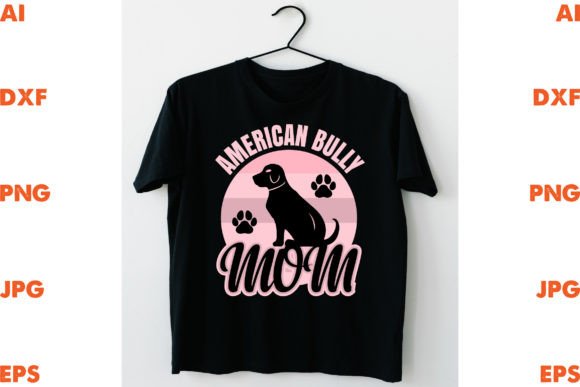
American Bully Mom: A Designer's Review for Real Embroidery
As someone who spends hours hunched over embroidery machines and scrutinizing digitized files before they ever touch fabric, I approach every new machine embroidery design with a critical eye. It is not just about whether the image looks cute on a screen; it is about how those lines translate into thread, how the stitch density behaves on different materials, and whether the final finished product will hold up to the wear and tear of daily life. Recently, I took a close look at the American Bully Mom graphic to evaluate its potential for real-world application. This isn't a theoretical exercise; this is about determining if this asset belongs in your craft business inventory or on your next custom order.
The first impression of American Bully Mom is one of bold character. The layout suggests a strong visual personality that fits perfectly with the sturdy, loyal nature of the breed it represents. When evaluating a file intended for T-Shirt Designs and general Graphics, the flow of the elements matters immensely. In this case, the composition feels balanced, likely offering a central focal point that draws the eye immediately. For an Etsy seller or a boutique owner, this kind of instant recognition is gold. Customers scrolling through a shop need to stop and feel a connection, and a well-composed "Mom" themed design often triggers that emotional response for dog lovers.
Visualizing the Stitch-Out: From Screen to Fabric
Let's move beyond the digital preview and imagine this design as a physical embroidery project. I recently considered using a similar concept for a custom order involving a heavy-weight cotton tote bag. The American Bully Mom design, with its editable elements, offers flexibility that is crucial for adapting to different canvases. If you are planning sweatshirt embroidery, the scale of the design becomes a key factor. The description notes a size of 18 feet by 15 feet, which is clearly a maximum scalable dimension rather than a stitch-ready size. In a practical scenario, you would resize this to fit a standard hoop, perhaps 5x7 or 6x10 inches, depending on your machine's capacity.
When resizing, the integrity of the lines is paramount. A design that looks crisp at 18 inches might lose definition if shrunk too small without adjusting the stitch density. For baby embroidery projects, such as a onesie or a nursery pillow cover, you would need to ensure that the details aren't so fine that they become a tangled mess of thread. Conversely, for a large back-panel design on a jacket, the openness of the fill areas would determine how much the fabric puckers. My assessment is that this design shines best on medium-to-large applications where the shapes can breathe. Think embroidered patch creations or the front chest of a hoodie.
Navigating Fabric Textures and Challenges
One of the most common pitfalls in commercial embroidery is ignoring the relationship between the design and the fabric texture. The American Bully Mom graphic appears to have distinct shapes that would rely heavily on fill stitch work for the body of the dog and potentially satin stitch for outlines or lettering. If you are stitching this onto a textured towel or a waffle-knit blanket, you must anticipate how the threads will sink into the loops. A dense fill might disappear or look uneven on high-pile fabrics.
Furthermore, consider the challenge of dark fabrics. If your client wants this on a black navy sweatshirt, your choice of thread colors becomes the make-or-break element. You may need to add a layer of underlay or even a light-colored backing fabric if the design relies on contrast that the thread alone cannot provide on dark material. Similarly, stretchy fabrics like jersey knits used in t-shirts require a robust stabilizer. Without proper stabilization, a design with significant coverage can cause the garment to warp permanently after the first wash. Always test on scrap fabric that matches your final garment before committing to the customer's item.
Commercial Viability and Product Pairing
For the small shop product creator, versatility is king. The American Bully Mom design feels right at home in several specific niches. It is an obvious candidate for holiday embroidery gifts, particularly for Mother's Day or Christmas. Imagine this stitched onto an apron for the grilling enthusiast or a kitchen towel for the home cook who loves her dogs. The "Mom" aspect adds a personal touch that elevates a generic graphic into a personalized gift.
However, caution is advised when applying this to curved surfaces like caps. The structural rigidity of a hat requires designs that are not too wide or overly dense in the center, as this can cause the cap to collapse or the visor to twist. If the design includes fine lettering or tiny details near the edges, these might get lost in the curve of the crown. For tote bag design applications, the flat surface is ideal, allowing the full detail of the digital embroidery file to shine without distortion.
Technical Considerations for the Professional
Before listing this as a design asset or using it for client work, there are technical boxes to check. Since the file allows you to edit all elements easily, take advantage of this. You might want to simplify complex areas if you are working with a lower-end machine or a specific thread type that frays easily. Check the hoop size requirements carefully. Even though the source file is massive, your machine has limits. Ensure the resized version fits within your available hoops without needing excessive re-hooping, which can lead to alignment issues.
It is also wise to run a black-and-white mockup test. This strips away the distraction of color and lets you see the true structure of the running stitch, satin, and fill areas. Does the design hold together visually without color? If yes, it is a robust design. If it falls apart, you may need to adjust spacing or density. Additionally, verify the licensing terms included in the ZIP folder. As an Etsy seller or independent contractor, selling finished items is often permitted, but reselling the digital file itself usually is not. Clarify this to protect your craft business from legal issues.
Final Verdict on Value and Appeal
In the world of handmade goods, customer trust is built on quality. A sloppy stitch-out can ruin a reputation, while a crisp, professional-looking American Bully Mom embroidery can build a loyal following. This design has the potential to enhance brand consistency if used across a line of products, from shirts to home decor. Its appeal lies in its relatability; it speaks directly to a passionate community of dog owners.
Ultimately, the success of this embroidery file depends on the skill of the operator and the care taken in preparation. It is not a "load and go" situation for high-stakes projects. It demands respect for the material, an understanding of thread dynamics, and a keen eye for detail. But for those willing to put in the prep work—testing stabilizers, choosing the right needles, and tweaking the size for the specific application—the result can be a stunning custom apparel piece or a cherished keepsake. Whether you are creating a printable mockup for your online store or stitching a one-off gift, this design offers a solid foundation for creativity, provided you approach it with the mindset of a craftsman who cares about the longevity and look of the final product.