Cousins Make the Best Friends: A Designer's Review
As someone who spends more time staring at stitch maps than most people spend on their phones, I approach every new machine embroidery design with a mix of excitement and skepticism. We have all been there: you buy a cute graphic online, load it onto your machine, and halfway through the run, you realize the density is too high for a baby onesie or the lettering is so small it will turn into a thread blob after one wash. That is why I took a close look at the Cousins Make the Best Friends design before committing it to a client project. This isn't just about whether it looks good on a screen; it is about how it performs as a finished product in the real world.
First Impressions and Visual Personality
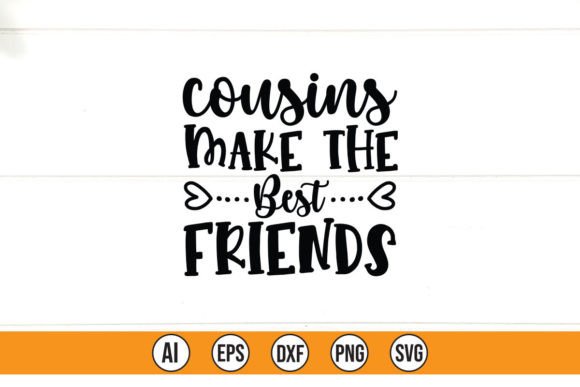
When I first pulled up the files for Cousins Make the Best Friends, the immediate takeaway was its versatility. The phrase itself carries a warm, nostalgic weight that resonates well with family-oriented buyers. Visually, the layout feels balanced, avoiding the cluttered look that often plagues text-heavy graphics. For those of us selling T-Shirt Designs or creating custom apparel, the mood here is crucial. It strikes a chord between playful and sentimental, making it an ideal candidate for reunion gear or holiday gifts.
The fact that this package includes 100 editable files and 100 color-changeable options is a significant win for professional use. In my line of work, being able to tweak an embroidery file to match a specific brand palette or fabric swatch without starting from scratch saves hours of digitizing time. The inclusion of vector formats like AI, EPS, and SVG alongside standard embroidery formats like DXF means this asset works just as well for heat transfer vinyl projects as it does for direct stitching. It is a robust set of design assets that respects the workflow of a busy Etsy seller or boutique owner.
Real-World Application: The Reunion Sweatshirt Scenario
To truly test the viability of Cousins Make the Best Friends, I imagined a specific scenario: a large family order for a winter reunion. The client wanted matching crewneck sweatshirts for about fifteen people, ranging from toddlers to grandparents. This is where the rubber meets the road. Sweatshirt fabric can be tricky; it has texture, stretch, and often a fuzzy surface that can swallow fine details.
In this context, the design shines because of its inherent simplicity. Complex applique design elements or overly dense fill stitch areas can make heavy garments feel stiff and uncomfortable. A design centered around clear typography and manageable graphical elements allows the garment to drape naturally. If I were stitching this onto a cotton-blend fleece, I would lean towards a slightly thicker satin stitch for the borders to ensure the edges don't fray after repeated wear, while keeping the internal fill light enough to maintain softness.
For a personalized gift like this, the emotional value is high. Customers aren't just buying a shirt; they are buying a memory. The clarity of the message in Cousins Make the Best Friends ensures that the sentiment lands immediately. Whether it is placed on the chest of a hoodie or across the back of a tee, the readability is key. I also considered how this would look as an embroidered patch. With the provided high-resolution PNG and transparent backgrounds, creating a mockup for a woven or chenille patch would be straightforward, adding another revenue stream for a craft business.
Navigating Fabric Challenges and Stitch Density
However, no design is perfect for every situation, and honest reviews require pointing out where caution is needed. If you plan to use Cousins Make the Best Friends on textured fabrics like waffle knits or corduroy, you need to pay close attention to the stitch density. High-density areas can cause puckering if the fabric isn't properly supported. Similarly, if you are working with stretchy performance fabrics for athletic wear, the rigidity of the stitches might restrict movement or cause the design to crack over time.
Small hoop sizes present another consideration. While the design is scalable, shrinking it too much for a cap front or a tiny baby bib could compromise the legibility of the text. Tiny lettering is the enemy of clean embroidery; what looks crisp on a monitor can become a tangled mess of running stitch and thread buildup on a curved surface like a baseball cap. My advice? Always check the dimensions against your available hoop size before cutting your fabric. If the design feels too tight, scale it up or simplify the elements if your software allows.
Dark fabrics offer their own set of challenges. Thread color contrast is vital here. The "100 color changeable" feature mentioned in the product description is a lifesaver for this. You cannot rely on the default colors when moving from a white tee to a navy blue sweatshirt. You must manually adjust the thread chart to ensure the design pops. A lack of contrast can make even the best Graphics look muddy and unprofessional.
Commercial Viability and Brand Consistency
For commercial embroidery professionals, consistency is everything. Your reputation hinges on the quality of the finished product. Using a reliable design like Cousins Make the Best Friends helps maintain brand standards. When a customer receives a handmade product that looks polished and durable, they trust your shop for future orders. This design supports that trust by offering a clean aesthetic that doesn't look cheap or hastily assembled.
Furthermore, the inclusion of high-quality mockups and instructions adds value beyond the stitch file itself. For digital product sellers, having ready-to-use visuals for listings can speed up the time-to-market. For physical product makers, the instructions likely offer guidance on stabilization and hooping, which is critical for avoiding production errors. However, always verify the licensing terms. Just because a file is editable doesn't automatically mean it is cleared for unlimited commercial resale as a digital file. Clarify whether you are selling the stitched item or the file itself.
Practical Notes for the Studio
Before you commit to a full production run, here are a few practical steps I recommend taking with this specific design:
- Test on Scrap Fabric: Never skip the stitch-out test. Use the same fabric and stabilizer combination you intend to use for the final product to check for registration issues.
- Check Stabilizer Choice: For knit fabrics like those used in sweatshirt embroidery, a cut-away stabilizer is usually safer than tear-away to prevent distortion over time.
- Review Small Details: Zoom in on the corners of the letters. If they look too sharp or crowded in the preview, consider adjusting the pull compensation in your editing software.
- Contrast Check: View your design in black and white mockups to ensure the shape holds up without relying on color differentiation.
- Wash Testing: If this is for a tote bag design or kitchen towel that will see frequent washing, run a test cycle to ensure the threads don't bleed or loosen.
Ultimately, Cousins Make the Best Friends feels like a solid addition to a designer's library. It bridges the gap between sentimental appeal and technical feasibility. Whether you are creating a holiday embroidery project for your own family or stocking inventory for a small shop product line, this design offers the flexibility needed to adapt to various materials and customer needs. Just remember that the file is only half the equation; your choice of thread, fabric, and technique will determine the final success of the project.